
By: Amoure Glover
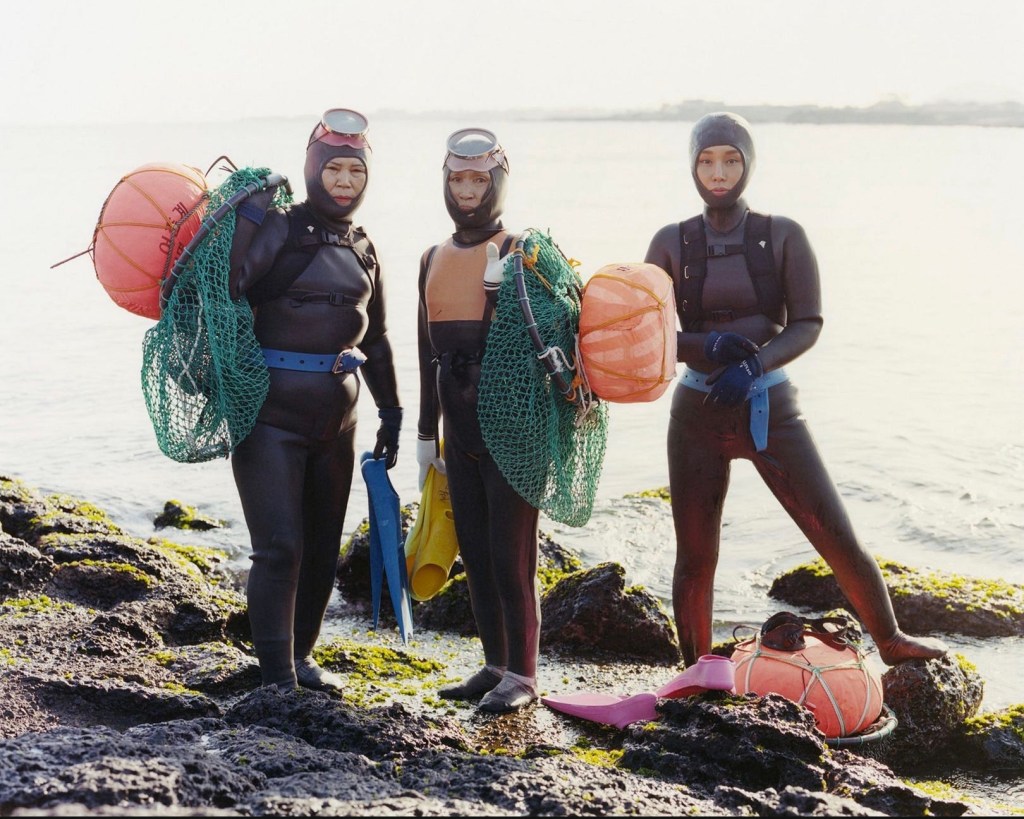
Do you love powerful women? How about deep-sea diving? Or maybe old traditions passed down through generations? If you answered “yes” to all three, you’re in luck! Jeju Island, located in South Korea, is home to the tough and resilient Haenyeo, legendary women divers who harvest seafood without using oxygen tanks.
Thanks to the 2025 K-drama “When Life Gives You Tangerines,” public interest in the Haenyeo has risen again. The drama, starring beloved actors IU and Park Bo-gum, offers a beautiful and emotional look into Jeju’s lifestyle and family dynamics. It explores how far love and sacrifice can go, especially within families. Beyond the heartfelt storyline, the show also highlights Jeju Island’s rich tradition of free diving, upheld by the incredible women known as the Haenyeo.
The Haenyeo are a unique community of women divers, recognized by UNESCO for their cultural significance. Their history dates back to at least the 17th century. Their role has always been vital not only providing food and income for their families, but also representing a rare example of a women-led profession in a traditionally patriarchal society.
How the Haenyeo work
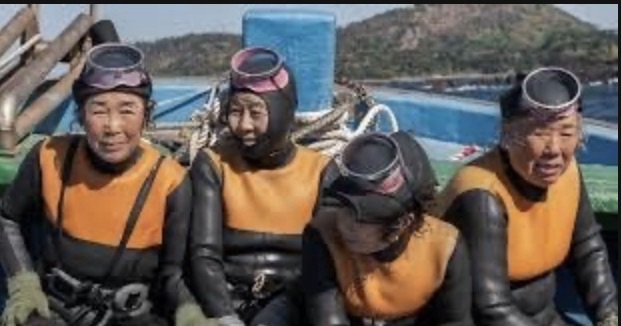
The community became almost entirely women after many men either died at sea or were conscripted into the military. In their absence, the women took charge of providing for their families. According to Oceanographic Magazine, the Haenyeo free dive with minimal equipment: just wetsuits, goggles, flippers, and weighted vests. It’s an intense and physically demanding job, so a ranking system was developed to categorize divers by skill level:
- Sanggun (high-level)
- Junggun (mid-level)
- Hagun (beginner-level)
A Sanggun can dive over 10 meters deep and is sometimes called a Daesanggun, meaning “supreme leader.” These elite divers not only lead in the water but also mentor the younger generation. Junggun divers work at slightly shallower depths, while Hagun are newcomers still building their experience.
Becoming a Haenyeo is no easy feat. Take Ji-ae Chae, a woman interviewed by journalist Emily Cataneo in 2017. At the time, she was a Junggun, and before being allowed to dive, she had to gain unanimous approval from her village. Even her mother, a Sanggun herself, was hesitant to support her at first. Ji-ae discussed the harsh realities of the job, including the challenges of exporting seafood, long working hours, and safety risks in the open ocean.
A typical day for a Haenyeo starts at sunrise, diving until lunchtime, followed by hours spent preparing their catch, like opening sea urchins.
Dying Tradition
While being a Haenyeo is deeply respected, the tradition is sadly dwindling. According to The Korea Times, the number of Haenyeo has fallen from tens of thousands to fewer than 3,000. Over 96% of the remaining Haenyeo are over the age of 60. The job’s physically demanding nature and the lack of interest among younger generations have contributed to this sharp decline.

So now we must ask ourselves: How can we preserve this powerful tradition? A tradition that not only sustains families but also symbolizes women leading and thriving in a challenging world.
Sources:
- https://www.koreatimes.co.kr/lifestyle/trends/20240720/interview-how-polish-expatriate-embraces-evolves-jejus-haenyeo-tradition
- https://oceanographicmagazine.com/features/last-of-their-kind/
- https://roadsandkingdoms.com/2017/the-female-free-divers-of-jeju/
- https://ich.unesco.org/en/RL/culture-of-jeju-haenyeo-women-divers-01068

Leave a comment